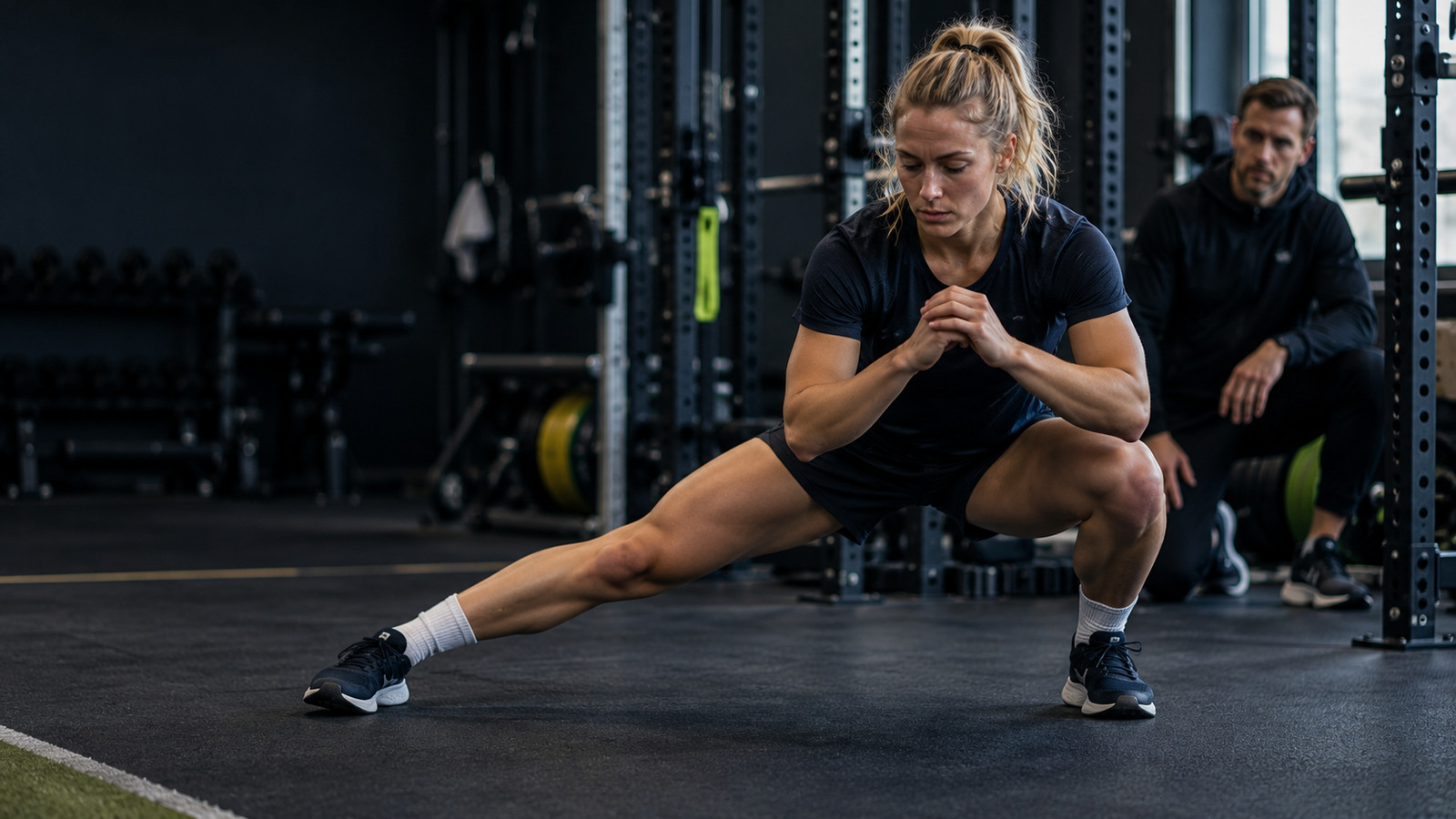
A hockey player mentions that the groin has been bothering him.
He can skate. He completed practice yesterday. He has every intention of playing this weekend. There was no dramatic incident, no unmistakable moment when something tore. Most days, the discomfort improves after he gets moving.
So we adjust a little. Perhaps we reduce the next gym session, add a hip mobility drill, or prescribe a Copenhagen variation. Everyone hopes the problem will settle.
Sometimes it does. Sometimes, three weeks later, we are still having the same conversation.
I have encountered this situation often enough to question the automatic response. The adductors are important, and developing them properly is essential in sports that demand rapid lateral movement. But a groin symptom does not tell us everything about its source. Nor does an isolated strength deficit explain how the player arrived at that point.
I want to know what the hip can do, how the pelvis behaves, what the athlete is exposed to, and whether the strength we measure is available in the positions and at the speeds the sport actually requires.
I also want to look at the structures that do not hurt. The lateral hip. The trunk. The hamstrings and quadriceps. The position of the head during a demanding movement. The way the foot meets the floor—or, for a hockey player, how the skate interacts with the ice.
Those observations do not give us permission to invent a chain of causes. A tight-feeling TFL is not proof of adductor pathology. A rotated pelvis is not a diagnosis. But dismissing those relationships before we examine them would be just as unhelpful.
The groin may be where the athlete feels the problem. The real task is to understand what the whole system is being asked to tolerate.
The First Mistake Is Calling Every Groin Problem an Adductor Injury
Groin pain describes a location. It does not identify the tissue or mechanism responsible.
The Doha agreement gave us a useful clinical language: adductor-related, iliopsoas-related, inguinal-related, and pubic-related groin pain, alongside hip-related and other causes [1]. The 2026 ESSKA–EHPA–ESMA consensus updates that approach and emphasizes a systematic examination, recognition of overlapping presentations, and careful interpretation of imaging [2].
Those distinctions are not academic details. They change what we do next.
Adductor tenderness with familiar pain on resisted adduction is a different presentation from a player whose symptoms emerge mainly at deep hip flexion, or from one with pain around the inguinal canal during abdominal loading. Two conditions may coexist. Sometimes the athlete's description is imprecise because several structures are irritated.
A meaningful assessment begins with the history: gradual onset or clear incident, location, training changes, previous episodes, pain during or after play, and any impact on force production or confidence. A clinician then examines relevant tissues, hip range, resisted movements, palpation, and the possibility of other diagnoses.
We must also know when routine exercise is not the appropriate starting point. Suspected fractures or bone stress injury, severe acute loss of function, significant tendon rupture, systemic symptoms, unexplained pain, and other concerning findings require medical evaluation. Imaging can help when indicated; it should be interpreted together with the history and examination, not as an automatic answer to every painful groin [2].
This clinical foundation matters for everything that follows. My discussion of movement, loading, and connected structures is an additional performance lens—not a substitute for diagnosis.
What the Adductors Actually Do in Sport
For all the attention we give the glutes, I sometimes think the adductors are treated as if their main job were to bring the knees together on a machine.
Their role is considerably broader.
The adductor longus, brevis, magnus, gracilis, and pectineus have different lines of pull and different contributions depending on joint angle and task. The posterior portion of adductor magnus, for example, can contribute substantially to hip extension. Across sporting movements, the group helps produce force, control the femur relative to the pelvis, and manage rapid changes of position.
Think about a soccer player reaching for a ball. Or a hockey player driving through a powerful lateral push before bringing the leg back under the body. The demands are not just concentric adduction. They involve positioning, high force, changing muscle lengths, and repeated transitions between producing and controlling movement.
Serner and colleagues examined video of 17 acute adductor longus injuries in professional male soccer players. The recorded situations included change of direction, kicking, reaching, and jumping; many occurred without contact [3]. It was a small descriptive series, but it shows why we must prepare more than a single exercise pattern.
An athlete can be strong in controlled adduction and still lack tolerance for a sudden lengthening demand, rapid deceleration, or repeated work across a competitive week.
That is the difference between possessing a strength quality and being able to use it where performance requires it.
Copenhagen Versus Standing Adduction: Why Position Changes the Exercise
Copenhagen adduction deserves its reputation as a valuable training tool. What I question is the tendency to make it the entire adductor program—or to assume it is the best measure of how prepared an athlete is.
Consider what changes when we move from a side-supported Copenhagen exercise to standing adduction.
During Copenhagen, the working leg supports much of the body's mass through an elevated contact point. The trunk and pelvis must remain controlled while the adductors contribute to supporting and moving the body. Moving the support from the knee toward the ankle increases the effective lever and commonly raises the demand. Pelvic rotation, support height, movement range, and contraction speed all change what the athlete experiences.
Now put the athlete on one leg with cable resistance applied to the other. The moving leg performs a different adduction task while the stance leg, pelvis, and trunk manage balance and the reaction to the external load. Give the athlete a hand support and part of that challenge changes. Change cable direction or starting hip angle and it changes again.
Neither exercise is automatically more 'functional.' They provide different mechanical and coordination demands. Those differences are useful.
In 2014, Serner and colleagues compared muscle activation during several adduction exercises in elite male soccer players. Both Copenhagen and standing elastic-band adduction produced high adductor longus activity [4]. But EMG does not directly measure muscle force or establish which exercise best prevents injury.
More recent work makes the selection question even more interesting. In a small modeling study, Collings and colleagues estimated individual adductor muscle forces across different strength exercises; exercises challenged different parts of the adductor complex in different ways [5]. In another 2026 laboratory study, Marušič and colleagues found higher peak hip-adduction torque with certain dynamometer-based eccentric tasks than with the Copenhagen variations they tested [6]. That does not mean a dynamometer is a superior rehabilitation program. It demonstrates that Copenhagen is not the only route to substantial adductor loading.
I choose the exercise according to the capacity I want to build, not according to which one has become popular.
If direct force development is the priority, I want progressive resistance I can quantify. If I need to challenge body support and pelvic control, Copenhagen may fit very well. If the limitation appears in standing, at a particular hip angle, or during a faster lengthening action, the program should eventually expose the athlete to that demand too.
The important part is progression—not defending a favorite exercise.
Muscle Length and Tension: Strength Is Not a Fixed Number
This may be one of the most useful concepts in the entire discussion.
We describe someone as having weak adductors, dominant abductors, or tight hamstrings. But the force that a muscle can produce is not identical at every length or every joint angle.
Active muscle force depends partly on the relationship between contractile filaments. Passive structures can add tension as the muscle-tendon unit lengthens. At the joint, measured torque is also influenced by the muscle's moment arm, recruitment of other muscles, stabilization, and test setup. Change the position and you may change several of those factors at once.
Welsh, Howitt, and Howarth tested 12 experienced recreational male hockey players in side-lying isometric hip adduction and abduction at three hip-abduction angles. The group's average adductor-to-abductor torque ratio changed from 1.49 at 0° to 1.92 at 10° and 2.30 at 20° [7]. The players did not become stronger between measurements. The testing position changed. Adduction torque increased and abduction torque decreased across the tested positions.
That should make us careful when someone cites a single 'ideal' strength ratio.
The classic Tyler study associated lower preseason adductor strength and lower adductor-to-abductor ratios with later adductor strains in professional male ice hockey players [8]. Those findings were important. But a ratio without its testing protocol is incomplete information. Equipment, joint angle, lever length, contraction type, and normalization all matter.
Research involving women also highlights this point. Ribič and colleagues assessed elite female soccer players at different hip positions and found that the measured strengths and ratios differed by test setup [9]. One position showed a relationship with previous symptoms in that sample, but a cross-sectional association is not a future-injury prediction rule.
The Pelvis Changes the Starting Conditions
Now add the pelvis.
A change in pelvic tilt or rotation changes the orientation of the hip relative to the trunk and femur. Muscles attaching to the pelvis may therefore work from different mechanical conditions. But it would be too simple to claim that anterior tilt always weakens one muscle and strengthens another.
The hamstrings and rectus femoris cross both the hip and knee. The vastus lateralis does not cross the hip; it is primarily a knee extensor. These anatomical differences determine what they can and cannot directly do to pelvic motion. Strength, passive length, active tension, and posture should not be used as interchangeable terms.
Kellis and colleagues found that altering pelvic tilt during isokinetic testing influenced some hip-strength outcomes while not producing identical changes in knee ratios [10]. Once again, position mattered—but not in the simplistic way we sometimes describe it.
This leads to a question I would ask of a hockey player who tests well in one position but experiences symptoms in another: Are we measuring the capacity that actually becomes limited in the sport?
I might compare adductor force at more than one standardized angle, examine discomfort as the muscle is loaded at greater length, or compare a well-supported exercise with a standing task. I would not change five variables at once and then claim to have identified a cause. But I would be interested in the pattern that emerges.
Muscle length–tension relationships give us a reason to investigate those differences. They do not give us license to diagnose a player from posture alone.
The Lateral Hip: Don't Ignore TFL, ITB, and Vastus Lateralis
When a player feels pain on the inside of the hip, our attention naturally goes there. I also want to understand what is happening on the opposite side.
The tensor fasciae latae participates in hip flexion, abduction, and internal rotation. Along with gluteus maximus, it contributes force to the iliotibial band. The ITB is a complex fascial structure, not simply a stiff rope that pulls the leg into a fixed position. The vastus lateralis contributes strongly to knee extension and lies in anatomical continuity with lateral thigh fascia, but does not directly cross the hip joint.
A detailed review by Hutchinson and colleagues underscores how incomplete our understanding of force transmission through the ITB remains [11]. That is important. We cannot credibly say that a 'tight ITB' is the cause of someone's adductor pain merely because the lateral thigh is tender or the pelvis appears asymmetrical.
Still, these structures can influence the way the athlete generates and manages force. If an athlete consistently organizes a task through hip flexion and internal rotation, or cannot control the femur under load, I want to examine which muscles are contributing and how the position affects the adductors' work.
I might change the task, provide external support, test a different hip angle, or compare the same movement with a different stance. If symptoms or performance change consistently, I have a reason to investigate further.
That is a very different thing from automatically stretching the ITB, releasing the TFL, or blaming the vastus lateralis.
Looking beyond the painful area should improve our assessment, not create a longer list of unsupported diagnoses.
Could the Lats Change the Way the Pelvis Is Loaded?
The latissimus dorsi is not the first muscle most people think about when discussing groin pain. But the trunk and pelvis are mechanically connected, and the lats have broad relationships with the thoracolumbar fascia.
Willard and colleagues describe the anatomy and functional considerations of that fascial region in detail [12]. There is also limited evidence of coordinated activity between the latissimus dorsi and contralateral gluteus maximus during locomotion [13].
The anatomy is real. Its direct clinical importance for adductor-related groin pain is not established.
I would never infer that a shorter or stronger lat has rotated the pelvis into the 'wrong' position and therefore created the groin problem. But I would observe the player when trunk rotation, arm position, or upper-body orientation appears to change the movement.
A hockey player may rotate the trunk to receive a pass while the lower body continues to accelerate. Another may lose movement options on one side during crossovers or transitions. Is the athlete capable of controlling trunk and pelvic rotation while force is produced through the leg? Does changing upper-body orientation alter the task in a repeatable way?
Those questions can be useful even when the answer turns out to be no.
And if a shoulder or lat intervention is proposed, I want a reason that is more substantial than the fact that everything is anatomically connected.
Hamstrings, Quadriceps, and the Pelvic Position We Actually Use
I would apply the same reasoning to the hamstrings and quadriceps.
A player may demonstrate excellent knee-extension strength and a respectable hamstring-to-quadriceps ratio. That does not tell me how force is shared around the hip during skating or how the pelvis is organized during lateral loading.
Most hamstring muscles cross the hip and knee. Rectus femoris crosses both joints, whereas the vasti do not. Passive tension and active torque vary with position. The pelvis moves in concert with the legs and trunk, and sometimes a different pelvic strategy changes the demands on the hip.
A review of factors affecting lumbopelvic motion identified relationships involving hamstring length, foot position, task speed, and other factors [14]. But it would be a mistake to equate a short hamstring with a particular static pelvic posture or to assume that strengthening quadriceps will automatically correct pelvic alignment.
I want to examine function. Can the athlete produce force through hip extension without losing the intended movement? Does a change in knee position alter the hip's available range? Can they manage a demanding lateral stance without pain or compensatory movement that affects performance?
The hamstring-to-quadriceps ratio can still be useful for the question it was designed to answer. It is not a global verdict on pelvic control.
Head Position and Vision: Interesting, Not a Groin Diagnosis
There is another variable I sometimes consider during movement: head and visual orientation.
A pronounced forward-head position can accompany changes in cervical and thoracic posture. Head orientation also influences where the athlete looks, and the head contributes to the body's overall mass distribution. These features can matter during balance and movement tasks.
A systematic review found some associations between forward-head posture and measures of postural control, while evidence for gait effects was mixed [15]. There is no convincing basis for calling forward-head posture a proven cause of sports-related groin pain.
But consider a hockey player whose movement changes when looking down at the puck compared with scanning across the ice. That is a task-specific observation worth examining. The visual demand, trunk orientation, and pelvis may change together.
If the change has no meaningful effect on force, symptoms, or performance, I move on. If it repeatedly alters the task, I investigate why.
This is where experience becomes useful: recognizing a variable that deserves a closer look, without mistaking recognition for proof.
The Feet Still Matter—But Hockey Is Not Running
How the foot interacts with the ground can influence tibial rotation and the motion available above it. Pronation is normal. It is not a defect to eliminate.
Experiments altering foot pronation during walking have found small changes in hip and pelvic kinematics [16]. A 2026 review reported that effects vary across symmetrical and asymmetrical foot conditions and between static and dynamic tasks, with substantial limitations in the evidence [17].
That is enough to justify observing the foot in a weight-bearing assessment. It is not enough to declare that someone's pronation caused their groin pain.
I would ask whether the athlete can use the ankle and foot effectively during a relevant task. Does a position change the femoral rotation or pelvis in a meaningful way? Is a limitation structural, learned, or a response to symptoms?
And for hockey there is another layer: a skate boot and blade constrain the foot and ankle differently from a running shoe on a track. A movement that changes with barefoot foot placement may not transfer directly to the ice. We have to test that connection, not assume it.
Why Strong Players Still Develop Groin Problems
Reduced strength has been associated with groin injury in some studies, including the early professional hockey work [8]. A systematic review identified previous injury, reduced adductor strength, and some measures of sport-specific exposure among relevant factors [18].
But more recent Swedish hockey research complicates the picture in a useful way. Wörner and colleagues found that 69.2% of reported hip and groin problems developed gradually and only 17% led to time loss. In that cohort, preseason strength was not significantly associated with later problems, while previous non–time-loss symptoms were associated with increased odds of further problems [19].
I see an important lesson in that contrast.
A player may produce good force on a testing day and still lack tolerance for the volume, speed, joint position, or repetition demanded by the sport. A low strength value may deserve attention without telling us who will be injured next month.
Previous problems may also change how the player loads the body long after the acute episode has apparently settled.
If I see an apparently strong athlete with repeated symptoms, I do not simply prescribe heavier adduction and assume the problem is solved. I look at when the symptoms emerge, which positions provoke them, what the exposure has been, and what the athlete can repeat without deterioration.
Strength matters. So does how, where, and how often that strength must be expressed.
The Hockey Reality: A Problem Can Exist Without a Missed Game
The player who keeps turning up is not necessarily the player whose groin is fully functioning.
A hockey player may alter the intensity of a lateral push, avoid a demanding crossover on one side, or need additional recovery after high-intensity skating. Some adaptations are so subtle that they do not appear in an ordinary team report.
I would examine acceleration, crossovers, transitions, changes of direction, and repeated high-intensity exposure—when clinically appropriate. I would compare the player's behavior and performance in those tasks with off-ice strength and movement findings.
A longer or more forceful skating push is not inherently inefficient; skating mechanics differ from ground-contact mechanics in running. The question is whether the player can produce the required force, direction, and timing without symptoms or loss of control.
I would also distinguish players by actual requirements. A forward's repeated acceleration demands differ from a defenseman's mix of backward and lateral skating, and the goaltender's hip positions are different again. Those are considerations, not rigid categories. Individual style and playing exposure matter as much as position labels.
Goaltenders: More Mobility Is Not Automatically the Answer
The butterfly and transitions into and out of it can place the hip into demanding positions. A goaltender may work near personal anatomical limits.
That is why I resist a blanket prescription to stretch more. A painful limitation may involve joint morphology, irritation, insufficient control, or strength in the available range. Pushing aggressively into a structurally limited position may not help.
The medical team and goaltending coach should understand the same problem. Sometimes the answer involves strength; sometimes technical movement options; sometimes load management; often a combination.
The target is a goaltender who tolerates the demands of the position while continuing to perform—not one who scores highly on an unrelated mobility demonstration.
Women’s Hockey and Soccer: Serious Demands, Better Individualization
Female athletes deserve a dedicated place in this discussion, rather than a short note at the end of an article built entirely around men.
The anatomy and broad training principles do not suddenly change. But research populations do, and so may training history, competitive exposure, and the specific problems we observe.
In a prospective Swedish women's hockey study, the hip and groin accounted for 35% of reported overuse injury locations and 49% of the recorded overuse severity burden [20]. These figures do not mean 35% of players were injured in the groin. They describe the distribution of reported overuse problems.
In a Swiss Women's Super League soccer cohort, 37 of 61 players reported at least one hip or groin problem, while only five of 45 recorded problems led to time loss [21]. It is a relatively small study and should not be projected onto every league, but the pattern is important: problems can remain present without taking a player out of training.
A study of female soccer players also showed that changing the hip position used for strength testing changes the measured adductor/abductor relationship [9]. Once again, our measurement needs context.
I would not prescribe a lighter program because a player is female, nor assume a study in male soccer transfers unchanged to women's elite hockey. I want to know her training history, symptoms, capacity, position requirements, and response to loading. The same seriousness, adapted to the individual.
The Program Has to Develop Capacity Without Becoming Another Source of Irritation
For longstanding adductor-related groin pain, passive treatment alone is often insufficient. Hölmich and colleagues demonstrated the value of active training in a randomized trial involving athletes with persistent adductor-related symptoms [22]. More recent clinical guidance emphasizes progressive exercise, attention to tissue irritability, and sport-specific return [23].
I would start at a level the athlete can tolerate and progress according to symptoms, function, and the demands ahead. That may involve isometric loading when appropriate, progressive dynamic adduction, exercises at longer muscle lengths, eccentric work, and eventual high-speed exposures.
The order and dose depend on the clinical picture. An acute tear is different from a gradually developing, low-irritability problem. A player who experiences substantial symptom aggravation after modest loading needs different decisions from someone who tolerates heavy work with only brief discomfort.
The Copenhagen exercise can be part of that progression. It should not be compulsory in every phase. A machine or cable may allow finer load control; a standing movement may challenge pelvis and supporting-leg control; a field or on-ice drill eventually tests whether the quality can be expressed under relevant conditions.
The most important variable is not how impressive the exercise looks. It is whether the athlete is adapting to the load we prescribe.
The Prevention Evidence We Should Actually Use
Harøy and colleagues conducted a cluster-randomized trial in male semiprofessional soccer using a progressive adductor strengthening program based on Copenhagen variations. Average season prevalence of groin problems was 13.5% in the intervention group and 21.3% in controls, with 41% lower odds of reporting a problem in the intervention group [24].
That is strong practical evidence in the population studied. It is not a guaranteed percentage reduction for an individual, and it does not establish an identical outcome in women's hockey.
Still, it supports a reasonable principle: develop the tissue's capacity before repeatedly demanding performance at its limits, and maintain relevant qualities during the season.
The Two-Game Week: Where Good Intentions Collide
Imagine a hockey team with games Thursday and Saturday.
One player is symptom-free and established in the program. Another has low-grade recurrent groin pain after skating. A third is returning from an acute adductor injury. They share a dressing room. They should not automatically share the same direct adductor loading that week.
For the healthy player, a properly timed maintenance stimulus may be sensible. For the player with recurring discomfort, I would look at recent skating exposure, symptom response, and which strength tasks can be tolerated without making the next practice worse. The returning player may need a separate progression, sometimes with reduced or altered ice exposure.
In many professional hockey programs, early-week gym work is performed before selected ice practices. That can be productive, but we have to consider what the player will do on the ice afterward. Unfamiliar high-demand eccentric work close to a game is not a smart default simply because it fits the written program.
There is no universal Monday exercise that solves this problem.
The week's loading needs to make sense as one plan, even when several professionals contribute to it.
A Practical Example: Three Tests, Three Different Questions
Consider a hypothetical professional player who has persistent right-sided groin discomfort. He can complete games but reports that maximal crossovers become uncomfortable late in harder practices.
During a short-lever Copenhagen, he produces good repetitions with little discomfort. A long-lever version provokes familiar symptoms as the hip is challenged at a different leverage. In standing cable adduction, he can work through most of the range but loses pelvic control near the more abducted starting position. During an on-ice progression, the problem appears mainly with repeated fast transitions in one direction.
These observations do not diagnose the painful structure. A proper clinical examination still has to do that.
But they help organize the next questions.
Is the limitation related to force at longer muscle lengths? The external moment? Trunk and pelvic control? Accumulated skating exposure? Or pain limiting force output? Perhaps more than one is contributing.
I would not claim we had 'found the weak muscle' from one response. I would standardize the tests, record symptoms and force where possible, alter one relevant variable, and revisit the movements over time. Then the training progression could develop what the player actually appears to lack.
The example is deliberately illustrative, not a reported patient case or a fixed protocol.
Returning to Play Requires More Than a Pain-Free Squeeze
Being clinically improved and being prepared for unrestricted sport are related but different milestones.
Serner and colleagues followed male athletes through criteria-based rehabilitation after acute adductor injuries. Their approach distinguished clinical recovery, controlled sport-specific training, and return to full team activity [25]. It was a prospective cohort, not a randomized demonstration that one exact protocol prevents reinjury. The important lesson is that each stage answers a different question.
I would want the player to tolerate relevant resisted testing and available range; then progressive high-speed and multidirectional work; then repeated sport-specific exposure at the level and frequency required for competition.
For a soccer player, this may include sprinting, kicking, reaching, and reactive cutting. For a hockey player, it includes the actual skating demands, not simply a successful straight-line acceleration or one good gym session.
I also want to know whether the player trusts the movement again. Pain-related hesitation can remain after strength measures improve. Confidence should be rebuilt through successful exposure, not assumed from a test score.
Return-to-play decisions remain shared clinical and performance decisions. No isolated strength ratio or predetermined number of days can replace the complete picture.
The Performance & Health Department Has to Connect the Decisions
This is why I believe groin problems are also a leadership issue.
A physiotherapist may correctly identify the clinical presentation. A strength coach may have detailed force data. A skating coach may see a technical issue that is invisible in the gym. A team coach may know that recent playing exposure has changed. Each observation can be useful.
But if they remain in separate compartments, the player may receive several individually reasonable interventions that do not form one coherent plan.
I want the people involved to understand the same problem: what we think is driving symptoms, what is measured, what remains uncertain, what each person is responsible for, how load will be progressed, and which outcomes would tell us that the work is helping.
That does not require everybody to agree that a single muscle is responsible. It requires a shared process for testing decisions and updating them when the athlete's response gives us new information.
A professional performance system should reduce conflicting instructions and unnecessary work. It should also help the athlete continue developing after the immediate symptoms settle.
Pain-free is an important result. It is not the whole development plan.
Final Thoughts: Ask Better Questions Before You Add More Exercises
When the groin keeps hurting, the adductors deserve attention. Sometimes they are the central clinical problem. Sometimes they are one part of a much larger loading and movement picture.
I want to examine the direct strength and the position in which we measure it. I want to understand how muscle length, external leverage, and pelvic orientation alter the available torque. I want to compare Copenhagen with standing exercises when that comparison answers a useful question.
I also want to look beyond the painful region when the athlete's movement gives me a reason: the lateral hip, TFL and ITB, quadriceps and hamstrings, trunk rotation and the lats, foot mechanics, and occasionally head and visual orientation.
None of those connections proves causation. They are places to look, not automatic diagnoses.
The strongest practitioner is not the one who finds an abnormality in every body segment. It is the one who can decide which observations matter, what can be tested, and when an intervention genuinely helps the athlete.
We can strengthen the groin and still leave the player unprepared for the demands of skating or soccer. We can reduce pain while losing physical capacity. We can restore excellent test numbers without restoring confidence or repeated performance.
Our job is to connect those parts.
The groin may be where the symptoms appear. Understanding the athlete, the mechanical conditions, and the demands of the sport is how we find a better way forward.
Scientific References
- Weir, A., et al. (2015). Doha agreement meeting on terminology and definitions in groin pain in athletes. British Journal of Sports Medicine, 49(12), 768–774. https://doi.org/10.1136/bjsports-2015-094869
- Hölmich, P., et al. (2026). Hip and groin pain in physically active adults with a focus on terminology, clinical examination and imaging: A formal ESSKA–EHPA–ESMA consensus. Knee Surgery, Sports Traumatology, Arthroscopy, 34, 3844–3855. https://doi.org/10.1002/ksa.70565
- Serner, A., et al. (2019). Mechanisms of acute adductor longus injuries in male football players: A systematic visual video analysis. British Journal of Sports Medicine. https://doi.org/10.1136/bjsports-2018-099246
- Serner, A., et al. (2014). EMG evaluation of hip adduction exercises for soccer players: Implications for exercise selection in prevention and treatment of groin injuries. British Journal of Sports Medicine, 48(14), 1108–1114. https://doi.org/10.1136/bjsports-2012-091746
- Collings, T. J., et al. (2026). Hip adductor muscle forces during strength training and rehabilitation exercises. Medicine & Science in Sports & Exercise, 58(8), 1751–1763. https://doi.org/10.1249/MSS.0000000000004002
- Marušič, J., et al. (2026). Biomechanics of Copenhagen adduction exercise and eccentric hip adductor exercises on a novel isokinetic dynamometer with within-session repeatability. Scandinavian Journal of Medicine & Science in Sports, 36(9), e70365. https://doi.org/10.1111/sms.70365
- Welsh, P., Howitt, S., & Howarth, S. J. (2020). The influence of hip joint angle on the ratio between adduction and abduction torque in experienced, recreational male ice hockey players. International Journal of Sports Physical Therapy, 15(1), 22–33. https://doi.org/10.26603/ijspt20200022
- Tyler, T. F., Nicholas, S. J., Campbell, R. J., & McHugh, M. P. (2001). The association of hip strength and flexibility with the incidence of adductor muscle strains in professional ice hockey players. American Journal of Sports Medicine, 29(2), 124–128. https://doi.org/10.1177/03635465010290020301
- Ribič, A., Hadzic, V., & Spudić, D. (2024). Hip adduction and abduction strength in different test positions and their relationship to previous groin injuries in women footballers. Research in Sports Medicine, 32(6), 1055–1066. https://doi.org/10.1080/15438627.2024.2368898
- Kellis, E., Konstantopoulos, A., Salonikios, G., & Ellinoudis, A. (2024). Does pelvic tilt angle influence the isokinetic strength of the hip and knee flexors and extensors? Journal of Functional Morphology and Kinesiology, 9(2), 73. https://doi.org/10.3390/jfmk9020073
- Hutchinson, L. A., Lichtwark, G. A., Willy, R. W., & Kelly, L. A. (2022). The iliotibial band: A complex structure with versatile functions. Sports Medicine, 52, 995–1008. https://doi.org/10.1007/s40279-021-01634-3
- Willard, F. H., Vleeming, A., Schuenke, M. D., Danneels, L., & Schleip, R. (2012). The thoracolumbar fascia: Anatomy, function and clinical considerations. Journal of Anatomy, 221(6), 507–536. https://doi.org/10.1111/j.1469-7580.2012.01511.x
- Shin, S.-J., Kim, T.-Y., & Yoo, W.-G. (2013). Effects of various gait speeds on the latissimus dorsi and gluteus maximus muscles associated with the posterior oblique sling system. Journal of Physical Therapy Science, 25(11), 1391–1392. https://doi.org/10.1589/jpts.25.1391
- Zawadka, M., et al. (2018). What factors can affect lumbopelvic flexion-extension motion in the sagittal plane? A literature review. Human Movement Science, 58, 205–218. https://doi.org/10.1016/j.humov.2018.02.008
- Lin, G., Zhao, X., Wang, W., & Wilkinson, T. (2022). The relationship between forward head posture, postural control and gait: A systematic review. Gait & Posture, 98, 316–329. https://doi.org/10.1016/j.gaitpost.2022.10.008
- Hornestam, J. F., et al. (2021). Foot pronation affects pelvic motion during the loading response phase of gait. Brazilian Journal of Physical Therapy, 25(6), 727–734. https://doi.org/10.1016/j.bjpt.2021.04.005
- Lee, K.-B., & Lee, D.-Y. (2026). Impact of symmetrical and asymmetrical foot pronation and arch deformities on three-dimensional pelvic kinematics during standing and walking: A systematic review and meta-analysis. Clinical Biomechanics, 141, 106999. https://doi.org/10.1016/j.clinbiomech.2026.106999
- Whittaker, J. L., Small, C., Maffey, L., & Emery, C. A. (2015). Risk factors for groin injury in sport: An updated systematic review. British Journal of Sports Medicine, 49(12), 803–809. https://doi.org/10.1136/bjsports-2014-094287
- Wörner, T., Thorborg, K., Clarsen, B., & Eek, F. (2022). Incidence, prevalence, and severity of and risk factors for hip and groin problems in Swedish male ice hockey players: A 1-season prospective cohort study. Journal of Athletic Training, 57(1), 72–78. https://doi.org/10.4085/1062-6050-0522.20
- Wörner, T., & Eek, F. (2025). Incidence, prevalence, and burden of health problems in elite female ice hockey players: A one-season prospective study. Translational Sports Medicine, 2025, 5092272. https://doi.org/10.1155/tsm2/5092272
- Reichmann, F., et al. (2025; issue 2026). Epidemiology and intrinsic risk markers of hip and groin problems in Swiss Women's Super League football: A full-season prospective cohort study. Sports Medicine and Health Science, 8(5), 549–557. https://doi.org/10.1016/j.smhs.2025.04.005
- Hölmich, P., et al. (1999). Effectiveness of active physical training as treatment for long-standing adductor-related groin pain in athletes: Randomised trial. The Lancet, 353(9151), 439–443. https://doi.org/10.1016/S0140-6736(98)03340-6
- Thorborg, K. (2023). Current clinical concepts: Exercise and load management of adductor strains, adductor ruptures, and long-standing adductor-related groin pain. Journal of Athletic Training, 58(7–8), 589–601. https://doi.org/10.4085/1062-6050-0496.21
- Harøy, J., et al. (2019). The Adductor Strengthening Programme prevents groin problems among male football players: A cluster-randomised controlled trial. British Journal of Sports Medicine, 53(3), 150–157. https://doi.org/10.1136/bjsports-2017-098937
- Serner, A., et al. (2020). Return to sport after criteria-based rehabilitation of acute adductor injuries in male athletes: A prospective cohort study. Orthopaedic Journal of Sports Medicine, 8(1), 2325967119897247. https://doi.org/10.1177/2325967119897247
Magnus Ågren
Hockey Performance Leadership & Player Health
I build hockey clubs’ performance systems, keep them working, and connect the people who run them.
People. Purpose. Performance.