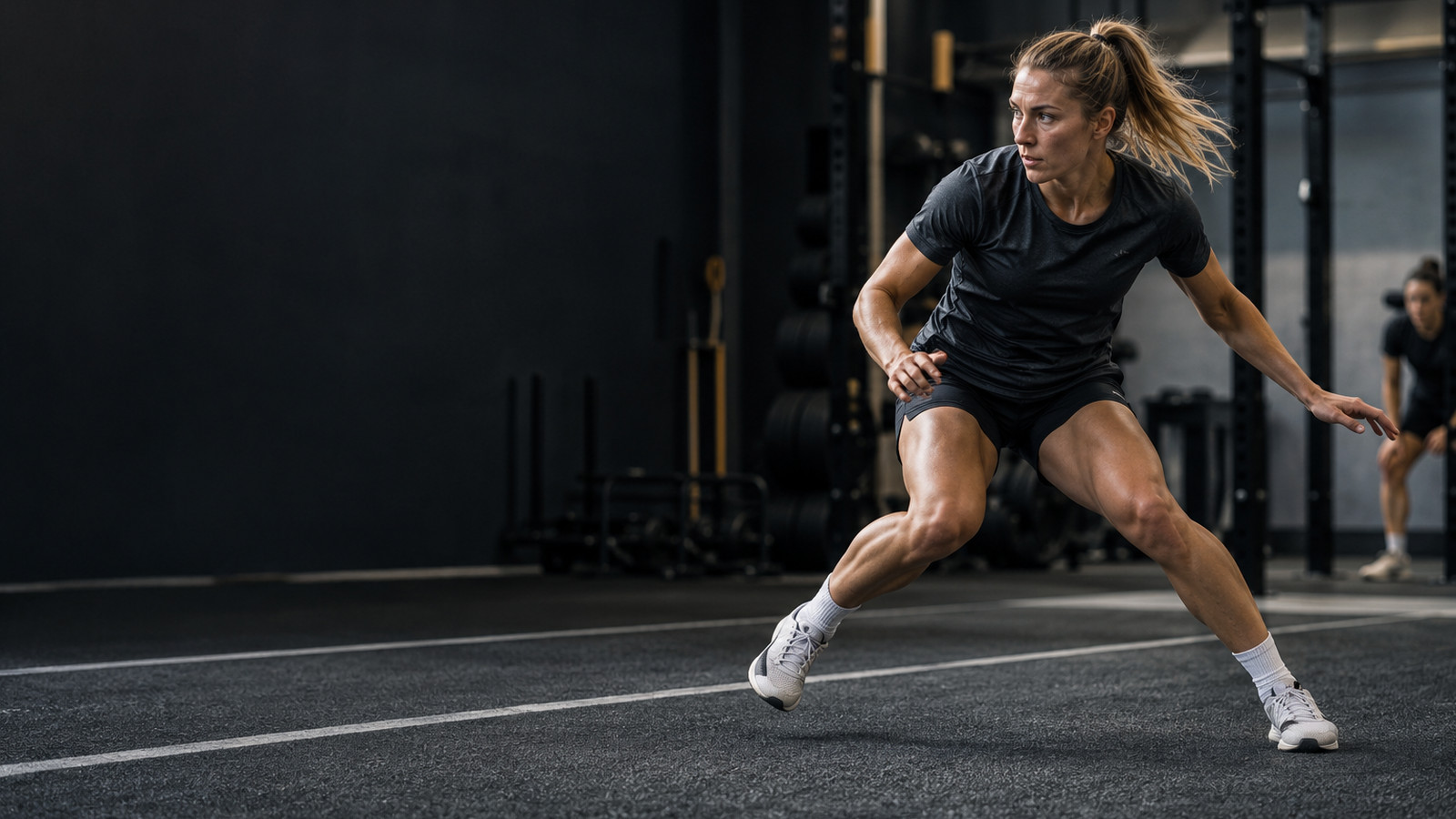
There is something I have seen repeatedly throughout my years working with athletes.
A coach observes an athlete squatting, landing, or performing a single-leg exercise. The knee moves inward, and almost immediately, the correction begins.
“Push your knees out.”
Sometimes a resistance band appears around the thighs. Sometimes the athlete is given another glute activation exercise. Occasionally, the correction works, at least while the coach is standing there reminding the athlete what to do.
But what happens when the resistance increases? When fatigue arrives? When the athlete has to react instead of thinking about every movement?
Quite often, the same pattern returns.
And that is where I believe we need to become better at our jobs.
A knee moving inward can certainly deserve our attention. But simply identifying the movement tells us surprisingly little about why it is happening.
It may reflect limitations in ankle mobility, insufficient force-producing capacity, a movement strategy the athlete has learned, reduced control of the pelvis, or how the trunk is positioned over the supporting leg.
We should also be looking at the quadriceps, including the vastus medialis obliquus (VMO), particularly when patellar stability or anterior knee symptoms are part of the picture.
And there is another area I believe coaches frequently overlook: the relationship between the shoulder girdle, thoracic spine, pelvis, and the way an athlete organizes movement beneath them.
But there is a performance dimension to this discussion that I think deserves considerably more attention.
What happens to speed and explosive power when an athlete cannot control the direction of force through the supporting leg?
When an athlete lands, accelerates, or changes direction, the body has a limited amount of time to absorb force and produce the next action.
If the knee moves inward excessively, particularly when that movement is poorly controlled, the athlete may need additional time and muscular effort to manage the forces involved.
That can influence ground-contact time, reactive strength, and the ability to produce force in the intended direction.
In jumping sports, it may also compromise the athlete's ability to convert the forces developed during the loading phase into an effective vertical takeoff.
These are important performance considerations.
But I want to be precise. Not every degree of inward knee movement produces a measurable loss in speed or jump height. The relationship depends on the athlete, the task, the forces involved, and the movement strategy.
What matters is whether the athlete can manage those forces effectively.
One principle has become increasingly important in how I assess people:
I want to understand why the body has chosen a movement strategy before I start trying to change it.
That means looking beyond the joint that catches our attention.
First, We Need to Understand What We Are Seeing
Dynamic knee valgus generally describes a movement pattern in which the knee moves medially relative to the hip and foot during a weight-bearing task.
But the visible appearance of the knee moving inward can arise from different combinations of movement.
The femur may adduct or internally rotate. The tibia may rotate. The pelvis may shift or rotate. The foot may change its position under load.
These are not identical mechanical events, even though they can look remarkably similar on video.
This distinction matters because a two-dimensional assessment from the front cannot fully explain three-dimensional joint mechanics.
It also matters because some inward knee movement is part of normal human movement.
We should not assume that every knee must remain perfectly centered over the foot throughout every squat, landing, change of direction, or skating movement.
The demands of a loaded squat are different from those of a high-speed lateral cut. A static photograph tells us very little about the forces involved.
We must also account for individual anatomy. Hip structure, femoral orientation, tibial alignment, and habitual movement patterns can influence how the leg appears during a task.
In other words, the knee position that looks ideal for one athlete may not be the correct reference for another.
Injury risk is influenced by the interaction of joint positions, external forces, movement velocity, fatigue, tissue capacity, and the demands of the task.
For example, a rapid, poorly controlled change in knee alignment during a demanding landing may deserve substantially more attention than a small, consistent inward movement during a controlled squat.
And remember, knee valgus, patellofemoral pain, and ACL injury risk are related topics, but they are not interchangeable diagnoses.
We need to assess the movement and the person performing it.
The Foot: Where the Body Negotiates With the Ground
Whenever I evaluate a weight-bearing movement, I want to understand what is happening where force enters the body.
The foot provides our contact with the ground. Its mobility, stiffness, sensory information, and capacity to manage load influence how the segments above it behave.
Pronation is a normal and necessary part of foot function. The foot must be capable of adapting to the surface and managing force.
However, when the timing or magnitude of that movement is poorly matched to the task, it can influence tibial rotation and the mechanical demands placed on the knee.
Equally important, a foot that appears relatively stable may still have limitations in ankle dorsiflexion.
A systematic review and meta-analysis by Lima and colleagues found an association between reduced ankle dorsiflexion and dynamic knee valgus [1].
This does not establish that restricted dorsiflexion causes every case of knee valgus. It tells us that overlooking the ankle can mean overlooking a meaningful part of the movement problem.
In practice, I want to examine several things.
Can the athlete maintain useful contact through the heel, first metatarsal head, and fifth metatarsal head while moving?
Can the ankle move through the required range without the athlete having to compensate somewhere else?
Does the foot remain adaptable under load, or does it become unstable when the demand increases?
And does changing the position of the foot, footwear, or depth of movement change what happens at the knee?
None of these observations should become a diagnosis on its own.
But they can help us understand the strategy.
I also think we should be careful with the instruction to keep the foot rigid at all times. A foot that cannot adapt is not necessarily a better foot.
What we are looking for is appropriate mobility combined with the ability to produce and transmit force.
That becomes especially important when the athlete has only a fraction of a second to manage contact and produce the next movement.
The Hip: Important, but Not the Answer to Everything
The hip has a major role in controlling the position of the femur and pelvis during movement.
That makes the hip abductors, external rotators, extensors, and their interaction with the trunk important considerations when assessing dynamic knee alignment.
Bittencourt and colleagues demonstrated that combinations of foot and hip characteristics were associated with greater frontal-plane knee projection in athletes. Their findings also highlighted that the relationships differed between movement tasks [2].
This is interesting because it moves us beyond the idea that one isolated strength value explains a complex movement.
An athlete may have considerable passive hip internal rotation and still demonstrate excellent knee control.
Another athlete may possess good measured hip-abduction strength but struggle to coordinate the pelvis and femur during a rapid landing.
The relationship between capacity and coordination matters.
There is also a more recent development worth discussing.
A 2026 systematic review and partial meta-analysis by Cashman and colleagues examined whether hip abductor and external rotator strength were associated with dynamic knee valgus in healthy individuals.
Across 22 included studies, the authors found no consistent significant relationship supporting the widely held assumption that weaker hip muscles necessarily produce greater valgus [3].
That should make us think.
It does not mean hip strength is unimportant. It means we should stop treating hip weakness as the automatic explanation whenever a knee moves inward.
Strength is a resource available to the athlete. How the athlete organizes and uses that resource is another question.
A strong gluteus medius does not guarantee an effective single-leg landing.
And a successful isolated hip-abduction exercise does not guarantee that the athlete will reproduce the required control when accelerating, braking, or changing direction.
I am interested in both.
Can the athlete produce force, and can the athlete organize that force when the movement becomes demanding?
The VMO: A Muscle We Should Neither Worship Nor Ignore
I want to give the vastus medialis obliquus particular attention because I believe it is too often caught between two extremes.
For years, the VMO was presented as a muscle that needed to be activated or strengthened in isolation to solve various knee problems.
Then the pendulum moved in the opposite direction, with some practitioners dismissing targeted VMO considerations almost entirely.
Neither extreme is especially helpful.
The VMO consists of the more obliquely oriented distal fibers of the vastus medialis. Their anatomical orientation allows them to contribute to the medial stabilization of the patella.
A 2023 systematic review examining quadriceps anatomy and patellar stability found evidence that VMO strength contributes to patellar stability, particularly in the early range of knee flexion. However, findings regarding VMO morphology and its influence throughout the full range of motion were inconsistent [4].
This distinction is important.
The VMO contributes to patellar control, but it should not be viewed as a muscle that independently prevents the entire knee from moving into valgus.
Patellar tracking and the orientation of the femur and tibia are different mechanical issues.
When the femur moves beneath the patella, the relative alignment of the patellofemoral joint can change even if the VMO is functioning.
Likewise, poor quadriceps capacity or altered muscle activation may contribute to functional limitations without being the original cause of the athlete's movement pattern.
Can We Really Isolate the VMO?
This is where the evidence becomes interesting.
A systematic review by Smith and colleagues examined whether changing hip, knee, ankle, or foot position could preferentially activate the VMO relative to the vastus lateralis.
The general finding was that these modifications did not consistently produce preferential VMO activation [5].
A randomized trial by Bennell and colleagues also compared specific VMO motor-control retraining with general quadriceps strengthening. Some differences in muscle-onset timing were observed, but these findings did not establish that a specialized VMO approach should replace general quadriceps rehabilitation [6].
This means we need to distinguish between the ability to influence muscle activity and the ability to produce a meaningful clinical or performance improvement.
A higher EMG reading in one exercise does not automatically translate into better patellar tracking, less pain, or improved movement under sporting demands.
And while certain exercises may change the relative recruitment of quadriceps regions, that is not the same as selectively developing one muscle without substantial involvement from the others.
How I Would Approach the VMO
If an athlete demonstrates poor quadriceps capacity, difficulty controlling knee extension, or symptoms consistent with patellofemoral pain, I want the VMO included in my reasoning.
But I am not interested in chasing the sensation of an isolated muscle contraction as the final objective.
I want to know whether the quadriceps can produce sufficient force throughout the range of motion the athlete needs.
I want to know whether pain or previous injury is inhibiting muscle performance.
I want to examine side-to-side differences in knee-extension strength, where reliable measurement is available, and establish whether those differences are meaningful for the athlete.
And I want to know whether the athlete can control the lowering and raising phases of a movement before progressing toward faster and more reactive demands.
Depending on the presentation, this may involve progressive knee extensions, isometric quadriceps work, controlled squats, step-downs, split squats, and eventually more demanding unilateral tasks.
The exercise choice needs to match the symptoms, strength deficits, and movement requirements.
For an athlete who needs to sprint, jump, or change direction repeatedly, the quadriceps must eventually be able to manage high forces at high rates of force development.
A slow, controlled knee extension can develop useful strength.
But being strong in that exercise does not tell me whether the athlete can absorb and redirect force effectively during an explosive movement.
That ability must also be developed and tested.
It should be remembered that patellofemoral rehabilitation is not simply a VMO-strengthening project.
Clinical guidelines and more recent best-practice recommendations support exercise therapy targeting the knee, commonly combined with hip exercises, alongside education and individually selected supporting interventions [7, 8].
There is no strong justification for treating VMO isolation as a universal solution.
My position is relatively straightforward.
The VMO deserves attention as part of quadriceps and patellofemoral function. But the real objective is restoring the capacity of the knee and the athlete, rather than winning an argument about isolated activation.
The Shoulders: An Overlooked Part of the Movement Strategy
This is where I want to expand the discussion beyond what is usually included in articles about knee valgus.
When we observe someone performing a single-leg squat, landing, or changing direction, our eyes naturally move toward the lower body.
But I also look at the shoulders.
Are they level?
Is one shoulder positioned farther forward?
Is the thorax rotated relative to the pelvis?
Does the athlete consistently shift their trunk toward or away from the supporting leg?
And perhaps most importantly, does the alignment change when the athlete moves?
There is a mechanical reason for asking these questions.
The shoulders are part of the upper body, and upper-body orientation contributes to the position and movement of the body's center of mass.
When the trunk changes position relative to the support foot, the line of action of the ground reaction force can change.
This influences the external moments that the hip and knee must manage.
Consequently, the same lower limb can experience different mechanical demands depending on how the athlete organizes the upper body.
Research examining cutting mechanics has repeatedly identified trunk positioning as an important consideration in knee joint loading.
Donelon and colleagues reviewed 23 studies and found that trunk, hip, knee, foot, and ground-reaction-force variables contributed to the mechanical demands associated with cutting tasks [9].
David and colleagues also examined whole-body movement strategies during cutting, including the orientation of the shoulders and pelvis. Their findings showed that different combinations of body orientation and foot-strike strategy were associated with different knee joint loads [10].
This is meaningful.
However, we need to interpret it correctly.
These studies do not demonstrate that an uneven shoulder height or a forward-positioned scapula independently causes knee valgus.
Much of the evidence concerns dynamic trunk and shoulder-pelvis orientation during movement, rather than a static postural asymmetry.
And that difference is substantial.
Why Shoulder Alignment May Matter in Practice
Consider an athlete standing on the right leg.
If the athlete rotates the thorax to the left while allowing the pelvis to move in the opposite direction, the relationship between the trunk, pelvis, hip, and supporting foot changes.
Depending on the task, this may alter the position of the center of mass, the direction of the external forces, and the amount of control required from the hip and knee.
Now introduce an asymmetrical shoulder position.
Perhaps the athlete holds one shoulder forward, elevates the opposite shoulder, or uses a habitual trunk rotation during movement.
Does this necessarily cause the knee to collapse inward?
No.
But it may be part of a movement strategy that changes how the athlete loads the lower body.
And that is worth investigating.
I would be especially interested in whether changing arm position or thoracic orientation alters the athlete's performance during the same standardized task.
For example, I might compare a controlled single-leg squat with the arms in a relaxed position, the arms extended forward, and a sport-relevant upper-body position.
I would watch the pelvis and knee, but I would also observe balance, available movement depth, trunk rotation, and the athlete's ability to maintain control.
If the movement changes, I have useful information.
I do not yet have proof of causation.
I have identified a relationship that may deserve further assessment.
The Problem With Treating Posture as a Diagnosis
A person with one shoulder slightly higher than the other does not automatically have dysfunctional movement.
Humans are asymmetrical.
Athletes develop sport-specific adaptations.
Someone who spends years throwing, skating, swinging, or working in a preferred rotational direction may demonstrate structural and functional differences that make sense within that environment.
The presence of an asymmetry does not tell us whether it is harmful, compensatory, or simply an effective adaptation.
What interests me is whether that asymmetry is associated with a meaningful limitation.
Does it restrict the athlete's available movement options?
Does it alter force production?
Does it influence how the athlete absorbs load?
Does it become more pronounced with fatigue?
Can the athlete control the opposite rotation or loading pattern when the task requires it?
And, when we modify the upper-body position, does something useful happen farther down the kinetic chain?
Those are much better questions than deciding that one shoulder must be corrected because it does not look perfectly aligned.
When the Knee Falls In, What Happens to Speed?
This is where the subject becomes particularly interesting from a performance perspective.
We often discuss knee valgus in connection with injury prevention.
That is understandable.
But athletes are not simply trying to avoid injury. They are trying to accelerate faster, jump higher, change direction more effectively, and repeat those actions throughout competition.
And that requires us to consider how movement mechanics influence force production.
Speed Depends on Force, Direction, and Time
During sprinting, the athlete must apply force against the ground to accelerate the body.
The amount of force matters.
But so does its direction and the time available to apply it.
During a change of direction, the athlete must first manage existing momentum, redirect the center of mass, and produce force toward the new direction of travel.
These actions require coordinated contributions from the foot, ankle, knee, hip, pelvis, and trunk.
Now consider what may happen when the knee moves excessively inward during ground contact.
The femur and tibia may undergo additional frontal- and transverse-plane motion.
The muscles responsible for controlling those movements must manage the associated forces while the athlete is also trying to brake or accelerate.
If the athlete cannot control the movement effectively, more time may be spent accepting and stabilizing the load before the next propulsive action is completed.
That can become a performance limitation.
It is important, however, not to describe this as force simply disappearing into the knee.
The force still exists. What changes is how it is distributed, which joint moments are created, how the athlete manages those moments, and how effectively the resulting ground reaction force contributes to the intended movement.
A poorly organized movement may require unnecessary motion or additional braking before effective propulsion occurs.
In a sport decided by fractions of a second, those differences deserve attention.
What the Research Shows About Contact Time
A particularly interesting study was published by Dewald and colleagues in 2025 [14].
The researchers examined 35 participants completing single-leg depth jumps under three conditions: their natural movement, deliberately increased dynamic knee valgus, and an attempt to avoid valgus.
They measured jump height, ground-contact time, and reactive strength index (RSI).
When participants deliberately increased knee valgus, their average ground-contact time increased from approximately 420 milliseconds during natural jumping to 528 milliseconds.
Their RSI also decreased from approximately 0.86 to 0.68.
That is a meaningful difference in the performance of a reactive jumping task.
The participants spent more time on the ground and demonstrated a poorer relationship between jump height and contact time.
But there is an important qualification.
The study did not find a statistically significant reduction in jump height between the different jumping conditions.
Also, the relationship between valgus and contact time was not consistently present during the participants' natural movement patterns. Anatomical alignment influenced the interpretation, and normalizing the measurements for bony alignment removed the reported correlations with performance.
This was a relatively small, cross-sectional study involving deliberately altered movement, not proof that every athlete with natural knee valgus will experience slower ground contacts.
Nevertheless, it demonstrates how a deliberately changed movement strategy can influence reactive performance.
A 2026 study by Kubota and colleagues adds another perspective [15].
Using three-dimensional motion analysis and force measurements during drop jumps, the researchers examined biomechanical factors associated with ground-contact time, jump height, and RSI in male collegiate athletes.
Their findings linked performance to several interacting variables, including vertical ground reaction forces, hip orientation at initial contact, and movement of the hip and knee through flexion and extension.
The results also highlighted the importance of concentric impulse and mechanical work for jump height.
This study did not demonstrate that greater knee valgus itself causes longer ground contacts. Instead, it reinforces the importance of considering force production, body position, and joint movement together.
Taken together, these studies support an important coaching consideration.
When an inefficient movement strategy increases the time required to absorb and redirect force, the athlete's reactive performance may suffer.
That is a very different statement from claiming that all visible valgus automatically makes an athlete slower.
Shorter Contact Is Not Always Better
We also need to avoid another common mistake.
Ground-contact time is not a performance objective in isolation.
An athlete who contacts the ground for less time but produces insufficient propulsive impulse may not accelerate effectively.
A powerful movement requires an appropriate combination of force magnitude, force direction, and force application time.
During a maximal sprint or a rapid rebound jump, the available contact window may be very short.
During a maximal countermovement jump, a longer force-development phase may contribute to greater takeoff velocity.
During skating, the requirements are different again.
The objective is not simply to make every movement faster by making every contact shorter.
It is to produce the required impulse efficiently, with the right movement strategy for the task.
That distinction matters when we begin coaching speed.
Jumping Performance: Can Excessive Knee Valgus Reduce Power and Jump Height?
When we discuss explosive power, I think it is useful to distinguish between the ability to produce force and the ability to express that force in a specific movement.
An athlete may possess excellent lower-body strength yet fail to use that capacity effectively during a jump.
Why?
Because jumping depends on the coordinated production of force through the hip, knee, and ankle, combined with appropriate timing and positioning of the body.
In a vertical jump, the athlete must develop sufficient net vertical impulse to accelerate the center of mass upward.
That determines takeoff velocity and, ultimately, jump height.
Joint power and whole-body vertical impulse are related, but they are not the same measurement. A high peak power value does not by itself guarantee a higher jump.
Now imagine an athlete descending into a countermovement.
As the athlete lowers the body, the muscles manage the downward momentum before reversing the movement.
During the subsequent propulsive phase, force must be developed through the lower limbs to accelerate the body upward.
If the knee moves excessively inward and the athlete cannot control that movement, the loading strategy may change.
The athlete may alter the amount of work performed at the hip and knee.
The timing of the reversal may change.
The direction and magnitude of the applied forces may also be affected.
If these changes reduce the net vertical impulse or takeoff velocity, jump height will decrease.
That is the mechanical relationship I am interested in.
But it is not inevitable.
An athlete may accommodate some frontal-plane knee motion without experiencing any measurable loss in jump performance.
And another athlete may jump higher using a slightly different movement pattern because it allows greater effective force production.
What Does the Evidence Tell Us?
Research on this relationship is developing, and the results are not entirely consistent.
The 2025 study by Dewald and colleagues showed that deliberately increasing knee valgus prolonged ground-contact time and reduced RSI, but did not significantly reduce jump height [14].
That distinction should not be overlooked.
A separate 2025 randomized controlled study involving male youth soccer players found that an eight-week program combining stretching, strength, and plyometric exercises improved jumping performance while also reducing measured knee valgus angles [16].
Those results support the value of integrated training.
However, because several physical qualities were trained simultaneously, we cannot conclude that the reduction in valgus was the specific cause of the improved jump performance.
Other research also emphasizes the importance of lower-limb force production.
Shinchi and colleagues found that jump height in elite male athletes was strongly related to peak hip power and moderately related to several other hip and knee kinetic and kinematic variables [17].
And the 2026 analysis by Kubota and colleagues highlighted the contributions of concentric mechanical work and vertical impulse to drop-jump height [15].
Taken together, these findings point toward a practical conclusion.
Effective jumping requires sufficient force-producing capacity and a movement strategy that allows the athlete to use that capacity.
Excessive, poorly controlled knee valgus may interfere with that process in some individuals.
But simply coaching the knees outward does not guarantee that the athlete will jump higher.
The Difference Between Jump Height and Reactive Strength
Consider two athletes who jump to approximately the same height after landing from a box.
One athlete completes the action with a short ground-contact time.
The other requires substantially longer to produce the same result.
Their jump heights may be identical, but their reactive qualities are not.
Reactive strength index is commonly calculated by dividing jump height by ground-contact time during a drop jump.
It provides one useful measure of how effectively an athlete combines rebound height with the time required to achieve it.
For sports involving repeated jumps, rapid takeoffs, and frequent changes of direction, this relationship can be particularly valuable.
However, RSI must be interpreted alongside jump height, contact time, task technique, and the athlete's physical capacity.
We should not reward a shorter contact time if the athlete achieves it by dramatically reducing jump height or using a strategy that fails to meet the demands of competition.
A 2026 study by Wang and colleagues also demonstrated the complexity of this relationship. Different landing-stiffness strategies produced differences in contact time and biomechanical loading indicators, while jump height did not necessarily differ [18].
Those indicators describe mechanical demands. They are not measurements of future injury occurrence.
The movement strategy that produces a short contact is not automatically the strategy that maximizes jump height or minimizes joint loading.
This is exactly why I prefer looking at several performance variables rather than relying on one number.
We should develop the athlete's ability to produce force quickly, control the direction of that force, and achieve the desired outcome without unnecessary movement.
That is the performance objective.
Why This Matters for Acceleration and Change of Direction
The relationship between knee alignment and performance becomes even more interesting when we move away from vertical jumping.
During acceleration, the athlete must produce a useful horizontal component of ground reaction force.
During deceleration and direction changes, the athlete must control momentum before redirecting it.
If excessive inward movement of the knee creates additional stabilization demands or alters the direction of effective force application, performance may suffer.
But we need to remember that the body moves in three dimensions.
Rotation is not automatically wasted movement.
Frontal-plane motion is not automatically inefficient.
A cutting athlete may deliberately rotate the pelvis, incline the trunk, or position the foot outside the center of mass to produce the required change in direction.
Some of these movements are essential.
The important question is whether the athlete can manage the resulting loads effectively.
Dos'Santos and colleagues examined the biomechanical determinants of change-of-direction performance in athletes completing 505 tests [19].
Faster performers demonstrated differences in horizontal force application, contact timing, and lower-body movement strategies.
These findings highlight the importance of how force is applied, rather than simply how much strength an athlete possesses.
There is also an important performance-versus-loading consideration.
Some movement strategies that allow faster cutting can produce greater knee joint loading.
We should therefore avoid assuming that the fastest possible execution is always the lowest-risk strategy.
Our responsibility is to develop the physical capacity and movement skills required to manage those demands.
For me, the goal is not to eliminate all knee movement.
It is to develop an athlete who can accept force, control the limb, and redirect the body efficiently at the required speed.
This Becomes Particularly Interesting in Hockey
Hockey offers an excellent example of why I prefer a whole-body assessment.
A player is constantly combining lower-body force production with upper-body rotation, stick handling, visual tracking, and contact preparation.
The shoulders and pelvis do not always face the same direction.
Nor should they.
A player may need to accelerate while looking across the ice, stabilize through contact while handling the puck, or generate force from a position that would look unusual in a traditional gym exercise.
These are legitimate performance requirements.
But they also create an environment in which preferred movement strategies may become highly developed while other options receive less exposure.
When I evaluate a hockey player, I am interested in whether the athlete can manage force on both legs, rotate effectively in both directions, and maintain useful pelvic and trunk control during unilateral loading.
I want to know whether there is a difference between the player's physical capacity and the way that capacity is expressed on the ice.
If a player demonstrates recurring medial knee movement during a single-leg exercise, I do not want to assume that the glutes are weak.
I want to investigate the ankle, hip, quadriceps, pelvis, and trunk.
And I want to see what happens when the shoulders and upper-body demands are changed.
There may be a meaningful relationship.
There may be none.
Both findings are valuable.
Speed on Ice Has Its Own Mechanical Demands
It is important not to transfer everything we know about running directly to skating.
During running, ground contacts involve a particular combination of braking, vertical support, and propulsion.
During skating, the blade interacts with the ice differently. Force is applied through a movement that combines hip extension, abduction, knee extension, and changing blade orientation.
The skater must also balance propulsive force against stride timing, recovery mechanics, body position, and the demands of the current skating phase.
Research by Budarick and colleagues examining high-caliber male and female hockey players highlighted the interaction between lower-body strength and skating mechanics during the transition from acceleration toward maximal speed [20].
For that reason, I would not simply assume that a longer skate-ice contact is undesirable.
A longer effective push may contribute to propulsion.
An unnecessarily prolonged contact caused by poor organization of the movement is another matter.
That is why I want to separate the athlete's physical capacity from the technical expression of that capacity on the ice.
A player may demonstrate excellent force production in the gym but fail to apply that force effectively during skating.
Another player may have relatively modest gym numbers but use an efficient skating technique to perform at a high level.
And a player with poor unilateral control may struggle to maintain the required blade pressure and body position during rapid transitions.
These are different problems requiring different interventions.
The aim is not to make a hockey player look perfect in the gym. It is to develop physical qualities that can be expressed effectively on the ice.
The Off-Ice and On-Ice Relationship
If a player demonstrates an inward knee movement off the ice, I want to understand whether the same limitation appears during skating.
I would examine acceleration, deceleration, crossovers, and transitions under appropriate conditions.
I would also consider the relationship between the upper body and the supporting leg.
Does the player lose control when rotating toward one side?
Is there a difference between left and right acceleration mechanics?
Does the player demonstrate a meaningful deficit in unilateral force production?
And does the movement change when fatigue increases?
Where testing resources allow, I would combine standardized strength measurements, video analysis, and timed skating assessments.
The purpose is to develop a clearer picture of how physical capacity and skating technique interact.
A movement limitation observed in the gym may contribute to a skating problem.
But it may also be unrelated.
Our job is to determine which.
Women, Knee Valgus, and the Demands of Elite Sport
There is another aspect of this discussion I want to address because it deserves more attention, particularly as women's professional sport continues to develop.
The relationship between knee alignment, physical preparation, and injury risk in female athletes.
This is especially relevant in soccer, where ACL injuries represent a substantial performance and player-health burden.
But it also matters in elite women's hockey.
The important thing is to approach the subject without falling into the trap of assuming that women are simply more vulnerable because of how their knees are positioned.
That explanation is far too simple.
What Actually Differs Between Women and Men?
There are anatomical, physiological, and neuromuscular differences between individuals, and some characteristics differ on average between male and female populations.
Pelvic morphology, femoral alignment, joint structure, ligament properties, muscle strength, and movement strategies can all influence the mechanics of the lower limb.
But these characteristics overlap substantially between individuals.
And they do not operate independently of training history.
An athlete who has spent years developing strength, braking capacity, and high-level movement skills may behave very differently from another athlete with similar anatomy but considerably less physical preparation.
A 2024 systematic review and meta-analysis by Donelon and colleagues examined differences in cutting biomechanics between men and women [23].
Across 17 studies involving 451 participants, the researchers found that women, on average, demonstrated greater knee abduction at initial contact and less peak knee flexion during change-of-direction movements.
These are relevant observations.
But there was another finding that I consider equally important.
The researchers did not find statistically significant sex differences in the internal or external knee joint loads measured across the included studies.
That is not proof that the loads are identical in every sporting situation.
Furthermore, the included studies had not adequately controlled for variables such as strength, resistance-training background, or skill development.
Think about that for a moment.
If we identify differences in movement between groups but do not properly account for how they have been trained, we need to be careful about attributing those differences to sex alone.
This does not dismiss anatomical or biological contributions.
It reminds us that physical preparation and movement experience belong in the discussion.
For me, that is an important distinction.
Being female is not a movement dysfunction. And being male is not evidence of superior movement control.
We need to assess the individual.
Soccer: Why the ACL Discussion Matters
The injury statistics in women's soccer deserve serious attention.
A study of German professional soccer covering seven seasons reported an ACL injury incidence during matches of approximately 0.91 per 1,000 hours for women, compared with 0.37 for men [25].
That represents approximately 2.5 times the match incidence in the studied population.
And the consequences extend far beyond the injury itself.
The UEFA Women's Elite Club Injury Study, involving 596 players across four seasons, identified ACL injuries as the injury category with the greatest time-loss burden. The median absence associated with ACL injury was 292 days [24].
That is a considerable amount of time away from training and competition.
It also means interrupted physical development, prolonged rehabilitation, and a major challenge for the player and the club.
But here is where we need to separate injury epidemiology from movement screening.
The fact that ACL injuries are a substantial problem in women's soccer does not mean that every athlete displaying knee valgus is at high risk.
Krosshaug and colleagues followed 710 elite female soccer and handball players and examined whether variables measured during vertical drop jumps could predict future ACL injuries [26].
The researchers found that the test had poor predictive accuracy.
That should influence how we interpret screening results.
If I see a player demonstrating pronounced knee valgus, I consider it a reason to investigate movement control, strength, previous injury, and the demands of the sport.
I do not consider it a reliable prediction that the player will injure her ACL.
Those are very different things.
Women's Hockey: The Same Knee, Different Sporting Demands
In ice hockey, the discussion becomes more complicated because skating does not reproduce the mechanics of running, jumping, or cutting on grass.
The athlete spends substantial time in a flexed skating position while producing lateral and backward-directed forces against the ice.
The supporting leg must coordinate hip, knee, and ankle movement while the athlete manages upper-body rotation, balance, stick position, and external contact.
This places significant demands on unilateral force production and control.
But we should not automatically transfer findings from female soccer players to female hockey players.
The injury mechanisms and mechanical demands are different.
Research specifically examining elite women's ice hockey remains much more limited than the literature available for soccer.
A 2025 prospective study by Wörner and Eek followed players in the Swedish Women's Hockey League during the 2022–2023 season [21].
Among reported acute injuries, the knee accounted for approximately 11%, while the shoulder and head were also prominent injury locations.
The hip and groin represented a particularly important burden among overuse problems.
This provides a useful perspective.
If we are responsible for player health, we cannot isolate the knee from the broader physical demands of the sport.
More recent Swedish research by Lahti and colleagues examined injuries in elite women's hockey following the introduction of body checking. The study highlights the importance of contact mechanisms and injury surveillance, while acknowledging limitations from the small number of reported injuries and the lack of a comparison group [22].
Neither study establishes dynamic knee valgus as a leading cause of injury in women's hockey.
And neither provides evidence that female players should be placed into a special knee-correction program simply because they are women.
What these studies tell us is that female hockey players deserve the same seriousness in assessment, physical development, injury surveillance, and coordinated medical support that we expect in a professional performance environment.
What I Would Look for in a Female Hockey Player
My approach would begin with the same principles I use for any athlete.
I want to understand the person, the sport, and the actual performance demands.
I would examine unilateral force production and control, knee-extension capacity, hip function, ankle mobility, and how the player organizes movement through the pelvis and trunk.
I would also assess whether the upper-body position influences the way she loads the supporting leg.
That becomes particularly interesting during skating, where the shoulders and pelvis frequently operate in different orientations.
If a player demonstrates inward knee movement during a single-leg task, I would investigate whether it represents a meaningful limitation.
Can she control the movement under greater load?
Can she produce and absorb force effectively?
Does the pattern appear on both sides?
Does it become more pronounced with fatigue?
Does it influence acceleration, transitions, or other measurable performance qualities?
And does the athlete have the physical capacity required for the demands of her position and playing level?
For me, the issue is not whether the athlete is female or male.
The issue is whether the athlete has the capacity and movement options required to perform.
I would also be careful with standardized comparisons.
Absolute strength, relative strength, training age, body dimensions, injury history, and the demands of the sport all influence how testing results should be interpreted.
A useful performance assessment should tell us what the individual athlete needs to develop.
It should not simply place her into a preconceived category.
What the Prevention Research Actually Supports
There is encouraging evidence here.
A 2020 systematic review and meta-analysis involving 11,773 female soccer players found that multicomponent exercise-based injury prevention programs were associated with a 45% reduction in ACL injury incidence [27].
The authors also identified important limitations in the certainty and quality of the underlying evidence.
More recently, the 2025 FAIR systematic review reported high-certainty evidence that neuromuscular training programs were associated with an estimated 61% relative reduction in ACL injury rates among female athletes in the included studies [13].
These are pooled estimates, not predictions of what an individual athlete or club will achieve.
The programs included combinations of strength, balance, landing, agility, and change-of-direction training.
That is considerably more informative than simply telling female athletes to keep their knees out.
The strongest prevention approach is not built around one muscle, one exercise, or one visually ideal movement.
It involves developing the qualities that allow the athlete to manage the forces encountered in sport.
And it requires consistency.
A training program that is scientifically sound but rarely performed will have limited practical value.
This is also where leadership becomes important.
The strength and conditioning coach, physiotherapist, sport coach, and medical staff need to understand how the physical development program contributes to player availability.
They also need to agree on who is responsible for implementation, how the work progresses, and how athletes are followed throughout the season.
For an elite women's hockey team, I would want that process integrated into the normal performance system.
It should not be treated as a short corrective exercise phase that disappears once the season becomes busy.
The precise effectiveness of soccer-derived ACL prevention programs cannot be assumed to transfer unchanged to ice hockey, but the principles of structured strength, coordination, progressive loading, and movement preparation remain valuable.
Develop Capacity. Don't Build a Program Around Fear.
There is one final point I want to make.
When we discuss knee valgus and injury risk in women, the language we use matters.
If female athletes are repeatedly told that their anatomy makes them vulnerable, or that their knees are inherently unstable, we risk creating an unnecessarily negative understanding of their physical capabilities.
I would rather show an athlete what she can develop.
Greater strength.
Better braking capacity.
Improved unilateral control.
More effective force production.
Better reactive abilities.
And greater confidence in demanding movement situations.
Those are qualities worth building in every athlete.
Women deserve individualized physical preparation informed by their actual needs, supported by research, and connected to the demands of their sport.
The objective is not to make women move like men. It is to develop each athlete to the highest level her individual capacity and the demands of her sport allow.
And that brings us back to the original question.
When the knee moves inward, we need to understand why.
We also need to establish whether changing that movement would meaningfully improve performance, reduce relevant loading demands, or contribute to better player health.
That responsibility does not change because of the athlete's sex.
What About Resistance Bands Around the Knees?
I have no objection to resistance bands as training equipment.
They are inexpensive, convenient, and useful when applied for an appropriate reason.
My objection is to treating the band as a universal correction for knee valgus.
A 2020 study by Reece and colleagues examined the effects of resistance bands during barbell back squats. The researchers observed greater gluteus maximus activation with band use, but also increased knee valgus angles and tibial rotation [11].
It would be easy to interpret those findings as proof that bands are bad.
But the broader evidence requires a more considered conclusion.
A 2023 narrative review by Forman and colleagues found that resistance bands could increase certain hip-muscle activation measures while often producing no immediate improvement in knee alignment, and sometimes increasing measured valgus [12].
The review also identified important limitations: much of the evidence involved acute testing, and participants were not necessarily selected because they demonstrated problematic inward knee movement.
The long-term effects of using bands specifically to retrain knee alignment remain uncertain.
So where does that leave us?
For me, it comes back to purpose.
If I use a band, I want to know what response I am trying to create.
Is the objective additional hip-muscle loading?
Is it sensory feedback?
Is it improving awareness of a movement?
Or am I simply copying an exercise because I have seen other coaches use it?
These are different reasons.
The band may provide a useful challenge. It may also make the original movement harder to control.
I would assess whether the athlete improves without the band, rather than assuming success because the athlete pushes against it.
A useful tool should contribute to a measurable training objective.
Otherwise, it is just another piece of equipment.
How I Would Assess the Athlete
I believe one of the biggest mistakes we can make is to build an intervention before we have properly examined the problem.
My assessment begins with the athlete's history and the task that reveals the movement.
I want to know whether there is pain, previous injury, instability, loss of function, or a recent change in training load.
From there, I would move through a sequence of questions.
1. What happens during the actual movement?
I would begin with simple tasks such as a squat, controlled step-down, and single-leg squat, progressing to landing or change-of-direction tasks when appropriate.
I would examine both sides and use consistent video angles when recording the movement.
The objective is to establish what is happening and under which conditions it becomes more pronounced.
2. Is there a meaningful restriction at the foot or ankle?
I would assess weight-bearing dorsiflexion, foot position, and how the athlete manages pressure through the supporting foot.
I would also examine whether the athlete changes strategy as movement depth or loading increases.
3. Does the athlete have the required strength?
Where suitable equipment is available, I prefer quantifying strength rather than relying exclusively on observation.
This may include knee-extension strength, unilateral lower-body force production, and relevant hip strength measures.
A side-to-side difference may deserve investigation, but any threshold must be interpreted in relation to the test, the individual's history, and measurement reliability.
Strength testing gives us information about capacity.
It does not automatically explain movement coordination.
4. What is happening at the pelvis and trunk?
I would examine single-leg pelvic control, lateral trunk motion, and rotational strategies.
I want to understand how the athlete positions the upper body relative to the supporting leg.
5. Does changing the shoulders or arm position change the result?
This is an additional assessment lens I consider useful, especially in rotational sports.
By altering the upper-body position within the same movement, we may identify how sensitive the athlete's lower-limb strategy is to changes in trunk orientation and balance demands.
This is exploratory testing, rather than a validated shoulder-based diagnostic test for knee valgus.
6. What happens when the task becomes demanding?
A movement that appears well organized during three controlled repetitions may change considerably when load, velocity, complexity, or fatigue increases.
I want to identify whether the athlete has sufficient capacity to manage the movement under the conditions that actually matter.
7. Is the Movement Affecting Performance?
This is where I want more than a visual assessment.
If an athlete demonstrates pronounced inward knee movement during a drop jump, I would be interested in measuring ground-contact time, jump height, and RSI.
If force plates are available, I would also examine the force-time characteristics, including relevant braking and propulsive variables.
When appropriate, I would compare standardized trials in which the athlete uses their usual technique with trials using a carefully instructed alternative.
I want to know whether the changes in movement correspond to changes in performance.
Does the athlete improve contact time without sacrificing jump height?
Can the athlete produce greater effective impulse?
Does unilateral performance differ between sides?
Does the movement remain controlled when the task becomes faster?
I would also use sprint and change-of-direction testing where relevant.
For hockey players, this should eventually include on-ice performance measures.
The central principle is straightforward.
If I believe a movement limitation is reducing performance, I want to test that belief rather than simply assume it is true.
And if there are symptoms, swelling, episodes of giving way, or suspected structural injury, appropriate clinical assessment takes priority over trying to correct the movement in the gym.
From Assessment to Training: Build Capacity, Then Challenge It
Once I understand the most likely limitations, the training should become more specific.
That does not mean every athlete needs an elaborate corrective exercise program.
Often, the solution is to improve the quality of the work already being done.
If ankle mobility is meaningfully restricted, I may address it while developing calf and foot capacity.
If quadriceps strength is insufficient, I want progressive knee-dominant training that the athlete can tolerate and develop from.
If unilateral pelvic control is limited, I may emphasize supported single-leg work, step-downs, split squats, and other tasks that allow the athlete to develop control before adding greater speed or complexity.
If upper-body orientation appears to influence the movement, I may include variations that challenge trunk rotation, anti-rotation, and the ability to manage unilateral loading with different arm positions.
But I do not want those exercises to become an endless collection of low-demand drills.
At some point, the athlete must demonstrate that the improved capacity transfers.
That means progressively introducing the actual demands of the sport.
For many athletes, the progression will involve moving from controlled strength tasks into eccentric braking, landing, acceleration, deceleration, and reactive direction changes.
For athletes who require repeated explosive efforts, I also want to develop their capacity to absorb and reproduce force within increasingly demanding contact times.
That may involve progressive plyometrics, hops, bounds, drop jumps, and other tasks selected for their intended mechanical demands.
But the progression must be earned.
An athlete who cannot control a low-speed landing should not automatically be exposed to high-intensity reactive work simply because faster ground contacts are the eventual objective.
Equally, an athlete who demonstrates good control at low speed still needs exposure to the forces and velocities required in competition.
The progression should reflect both capacity and performance.
The Whole System Must Work Together
This brings me back to a point I consider essential.
The physical preparation, rehabilitation, technical coaching, and performance assessment of an athlete should not operate as disconnected activities.
If a physical limitation has been identified, the people responsible for developing the athlete need to understand what it is, why it matters, and how improvement will be evaluated.
The strength and conditioning coach may develop the required force-producing capacity.
The physiotherapist may address symptoms, tissue tolerance, or rehabilitation limitations.
The sport coach may help the player express those qualities within the technical demands of competition.
And the person coordinating those functions must ensure that everyone is working toward the same outcome.
Otherwise, we risk having one person correcting a movement in the gym while another unknowingly reinforces a different strategy during sport practice.
The athlete ends up receiving conflicting information.
A successful development process requires more than a collection of good exercises.
It requires connected decisions.
One More Thing: Don't Confuse Appearance With Performance
I think we have become far too comfortable judging human movement from a photograph or a short clip.
We see a position we do not like, and we immediately want to correct it.
But the human body is not designed to produce identical joint positions in every task.
Movement is an adaptation to the demands being placed upon us.
An athlete may use a particular strategy because it is effective for the task, because it compensates for a limitation, or because it is the only strategy they currently have available.
Our responsibility is to determine which.
For me, an important goal of training is to increase the athlete's available options.
Can they produce force in more than one position?
Can they absorb force without losing control?
Can they respond to changes in direction, load, and balance?
Can they maintain those abilities as the demands of training and competition increase?
And can we achieve this without turning every natural variation into a dysfunction?
I would much rather develop an athlete who is strong, adaptable, and capable across a range of positions than one who can reproduce a cosmetically perfect squat only under carefully controlled circumstances.
I also want to know whether the changes we make actually improve performance.
If the athlete demonstrates better knee alignment but no improvement in strength, speed, jumping ability, symptoms, or relevant movement capacity, I would question what we have achieved.
The appearance of a movement may improve without meaningfully changing the athlete's ability.
That does not make movement quality irrelevant.
It means movement quality should be connected to a purpose.
And that purpose needs to be clear.
Final Thoughts: The Knee Is Part of a System
The next time you see an athlete's knee moving inward, resist the temptation to immediately prescribe another band exercise.
Look at the foot.
Look at the ankle.
Examine the strength and movement options available at the hip.
Consider the quadriceps, including the VMO, particularly when patellar control or anterior knee symptoms are relevant.
Watch the pelvis and trunk.
And do not forget the shoulders and how the upper body is positioned relative to the supporting leg.
Then examine what the movement means for performance.
Is the athlete spending unnecessary time on the ground?
Can the athlete absorb and redirect force effectively?
Is reactive strength limited?
Can the athlete produce the vertical impulse required for an explosive jump?
Can the athlete accelerate and change direction while maintaining the control required for the task?
These are questions worth asking.
But they must be investigated rather than answered from appearance alone.
Just as importantly, question your own assumptions.
If the hip is strong but the movement remains poorly controlled, perhaps strength is not the main limitation.
If the VMO is active but the athlete continues to experience patellofemoral symptoms, perhaps the problem requires a broader approach.
If changing the trunk or shoulder position alters the movement, explore why before concluding that you have found the cause.
And if changing knee alignment does not improve performance, be prepared to reconsider the intervention.
The available science gives us valuable direction, but it does not eliminate the need for experienced observation, individual testing, and professional judgment.
We are dealing with people, not isolated muscles.
The objective is to help each person develop the physical qualities, movement options, and confidence required for what they want to do.
For a hockey player, that means expressing those qualities effectively on the ice.
For an athlete in a jumping sport, it means developing the capacity to produce force and use it effectively during takeoff and landing.
For any athlete, it means developing a body that can tolerate and respond to the demands being placed upon it.
And for those of us responsible for performance and player health, it means making sure that the different parts of the development process support one another.
The knee may be where the problem becomes visible. Understanding the person, the movement, and the demands of performance is how we begin to find the right solution.
Scientific References
Lima, Y. L., et al. (2018). The association of ankle dorsiflexion and dynamic knee valgus: A systematic review and meta-analysis. Physical Therapy in Sport, 29, 61–69. https://doi.org/10.1016/j.ptsp.2017.07.003
Bittencourt, N. F. N., et al. (2012). Foot and hip contributions to high frontal plane knee projection angle in athletes: A classification and regression tree approach. Journal of Orthopaedic & Sports Physical Therapy, 42(12), 996–1004. https://doi.org/10.2519/jospt.2012.4041
Cashman, G., et al. (2026). The effect of hip abductor or external rotator strength on dynamic knee valgus in healthy subjects: A systematic review with partial meta-analysis. The Knee, 62, 104565. https://doi.org/10.1016/j.knee.2026.104565
Abelleyra Lastoria, D. A., Benny, C. K., & Hing, C. B. (2023). The effect of quadriceps anatomical factors on patellar stability: A systematic review. The Knee, 41, 29–37. https://doi.org/10.1016/j.knee.2022.12.015
Smith, T. O., et al. (2009). Can vastus medialis oblique be preferentially activated? A systematic review of electromyographic studies. Physiotherapy Theory and Practice, 25(2), 69–98. https://doi.org/10.1080/09593980802686953
Bennell, K., et al. (2010). Effects of vastus medialis oblique retraining versus general quadriceps strengthening on vasti onset. Medicine & Science in Sports & Exercise, 42(5), 856–864. https://doi.org/10.1249/MSS.0b013e3181c12771
Willy, R. W., et al. (2019). Patellofemoral pain: Clinical practice guidelines. Journal of Orthopaedic & Sports Physical Therapy, 49(9), CPG1–CPG95. https://doi.org/10.2519/jospt.2019.0302
Neal, B. S., et al. (2024). Best practice guide for patellofemoral pain based on synthesis of a systematic review, the patient voice and expert clinical reasoning. British Journal of Sports Medicine, 58(24), 1486–1495. https://doi.org/10.1136/bjsports-2024-108110
Donelon, T. A., et al. (2020). Biomechanical determinants of knee joint loads associated with increased anterior cruciate ligament loading during cutting: A systematic review and technical framework. Sports Medicine - Open, 6, 53. https://doi.org/10.1186/s40798-020-00276-5
David, S., et al. (2017). Identification and risk estimation of movement strategies during cutting maneuvers. Journal of Science and Medicine in Sport, 20(12), 1075–1080. https://doi.org/10.1016/j.jsams.2017.05.011
Reece, M. B., et al. (2020). Barbell back squat: How do resistance bands affect muscle activation and knee kinematics? BMJ Open Sport & Exercise Medicine, 6(1), e000610. https://doi.org/10.1136/bmjsem-2019-000610
Forman, D. A., et al. (2023). The use of elastic resistance bands to reduce dynamic knee valgus in squat-based movements: A narrative review. International Journal of Sports Physical Therapy, 18(5), 1206–1217. https://doi.org/10.26603/001c.87764
Bullock, G. S., et al. (2025). Prevention strategies for lower extremity injury: A systematic review and meta-analyses for the Female, woman and/or girl Athlete Injury pRevention (FAIR) consensus. British Journal of Sports Medicine, 59(22), 1575–1586. https://doi.org/10.1136/bjsports-2025-109910
Dewald, M., et al. (2025). Are we overlooking anatomical contributions to dynamic knee valgus? International Journal of Sports Physical Therapy, 20(2), 189–198. https://doi.org/10.26603/001c.128587
Kubota, H., Kishi, K., Kurita, T., & Takai, Y. (2026). Biomechanical determinants of ground contact time and jump height during drop jumps in male athletes. PeerJ, 14, e20947. https://doi.org/10.7717/peerj.20947
Turan, M. B., et al. (2025). The effects of an integrated training program on jump performance and knee valgus in youth football players: A randomised controlled group study. BMC Sports Science, Medicine and Rehabilitation, 17, 216. https://doi.org/10.1186/s13102-025-01266-4
Shinchi, K., et al. (2024). Relationship between jump height and lower limb joint kinetics and kinematics during countermovement jump in elite male athletes. Sports Biomechanics, 23(12), 3454–3465. https://doi.org/10.1080/14763141.2024.2351212
Wang, D., et al. (2026). Cluster-based identification of movement patterns in bilateral and unilateral drop jump tasks: Insights into the performance-injury conflict. Sports Biomechanics. Advance online publication. https://doi.org/10.1080/14763141.2026.2727081
Dos'Santos, T., et al. (2020). Biomechanical determinants of the modified and traditional 505 change of direction speed test. Journal of Strength and Conditioning Research, 34(5), 1285–1296. https://doi.org/10.1519/JSC.0000000000003439
Budarick, A. R., et al. (2020). Ice hockey skating sprints: Run to glide mechanics of high calibre male and female athletes. Sports Biomechanics, 19(5), 601–617. https://doi.org/10.1080/14763141.2018.1503323
Wörner, T., & Eek, F. (2025). Incidence, prevalence, and burden of health problems in elite female ice hockey players—A one-season prospective study. Translational Sports Medicine, 2025, 5092272. https://doi.org/10.1155/tsm2/5092272
Lahti, A., Stenman, E., Kauppinen, S., Grundberg, A., & Sundquist, K. (2026). Epidemiology of injuries in elite female ice hockey players allowed body checking: A two-year prospective cohort study. European Journal of Sport Science, 26(9), e70245. https://doi.org/10.1002/ejsc.70245
Donelon, T. A., et al. (2024). Differences in biomechanical determinants of ACL injury risk in change of direction tasks between males and females: A systematic review and meta-analysis. Sports Medicine - Open, 10, 29. https://doi.org/10.1186/s40798-024-00701-z
Hallén, A., et al. (2024). UEFA Women's Elite Club Injury Study: A prospective study on 1527 injuries over four consecutive seasons 2018/2019 to 2021/2022 reveals thigh muscle injuries to be most common and ACL injuries most burdensome. British Journal of Sports Medicine, 58(3), 128–136. https://doi.org/10.1136/bjsports-2023-107133
Bloch, H., et al. (2025). ACL injuries in professional football (soccer): Women face higher risk, later surgical care and longer time loss compared to men. Knee Surgery, Sports Traumatology, Arthroscopy. https://doi.org/10.1002/ksa.70160
Krosshaug, T., et al. (2016). The vertical drop jump is a poor screening test for ACL injuries in female elite soccer and handball players: A prospective cohort study of 710 athletes. American Journal of Sports Medicine, 44(4), 874–883. https://doi.org/10.1177/0363546515625048
Crossley, K. M., et al. (2020). Making football safer for women: A systematic review and meta-analysis of injury prevention programmes in 11,773 female football (soccer) players. British Journal of Sports Medicine, 54(18), 1089–1098. https://doi.org/10.1136/bjsports-2019-101587
Magnus Ågren
Hockey Performance Leadership & Player Health
I build hockey clubs’ performance systems, keep them working, and connect the people who run them.
People. Purpose. Performance.